by Jeff Gogué
In Tattooing, blossoms aren’t just background fill.
They’re decisions about who you are and how you face the harsh reality of life.
Five petals.
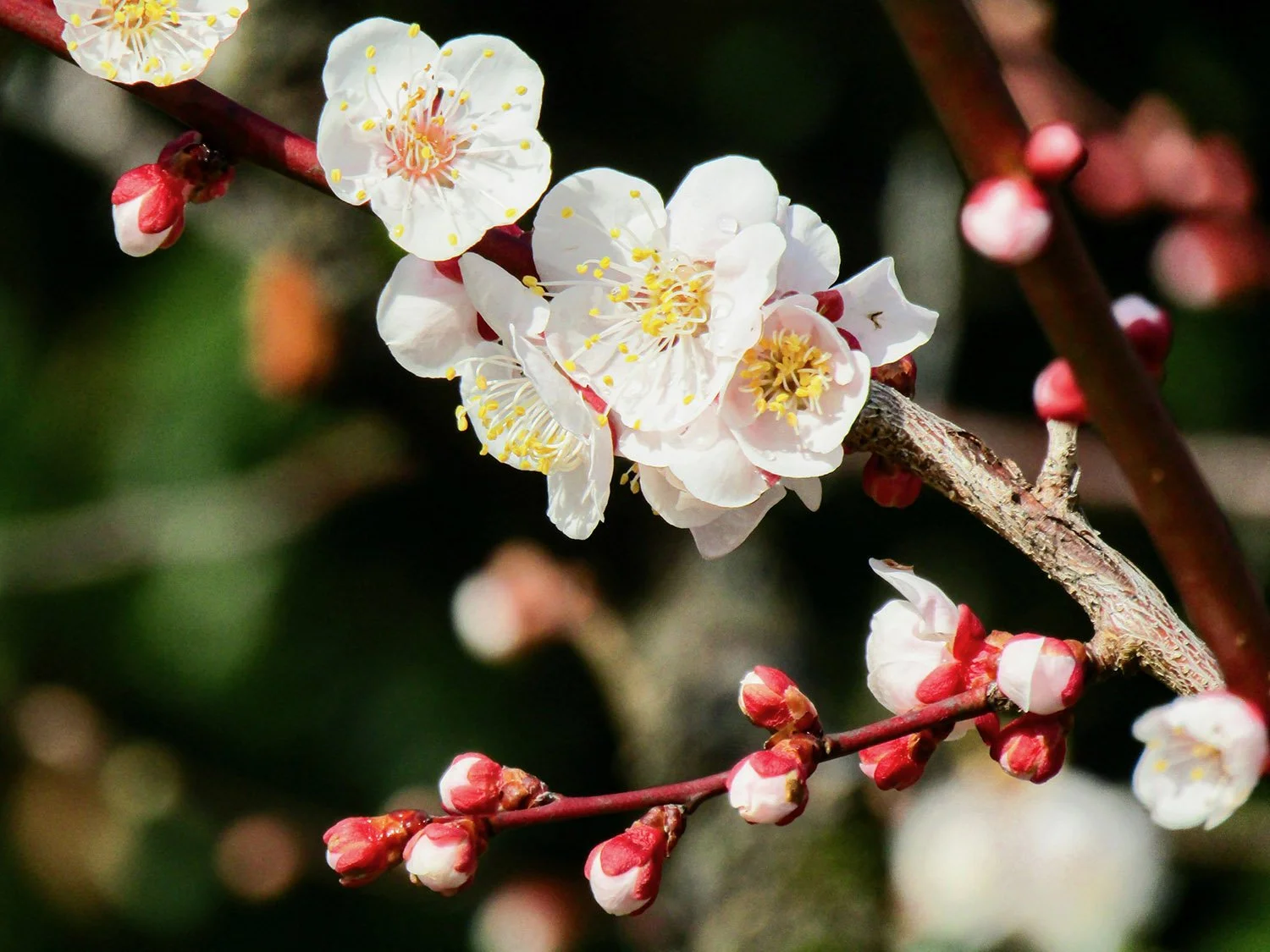
The plum blossom—ume—shows up first, right at the end of winter. The cherry—sakura—comes a little later, when spring starts to wake up. To most people, they look the same: small, pale, perfect. Their seasons overlap for a moment, a quiet handoff between cold and warmth, one fading as the other takes over. Both carry cultural weight—symbols of endurance, renewal, and impermanence that sit deep in the Japanese psyche, and in the hearts of the people who’ve come to feel their pull.
I want you to consider the vast difference between these seeming twins.
Blooming in February, ume is a symbol of winter in Japan. The plum blossom sends hope for the coming spring. It is a sign that winter has run its course and is making way for the coming sun and the slow explosion of new life. Ume is a sign of strength and tenacity—bravery, courage, and fortitude.
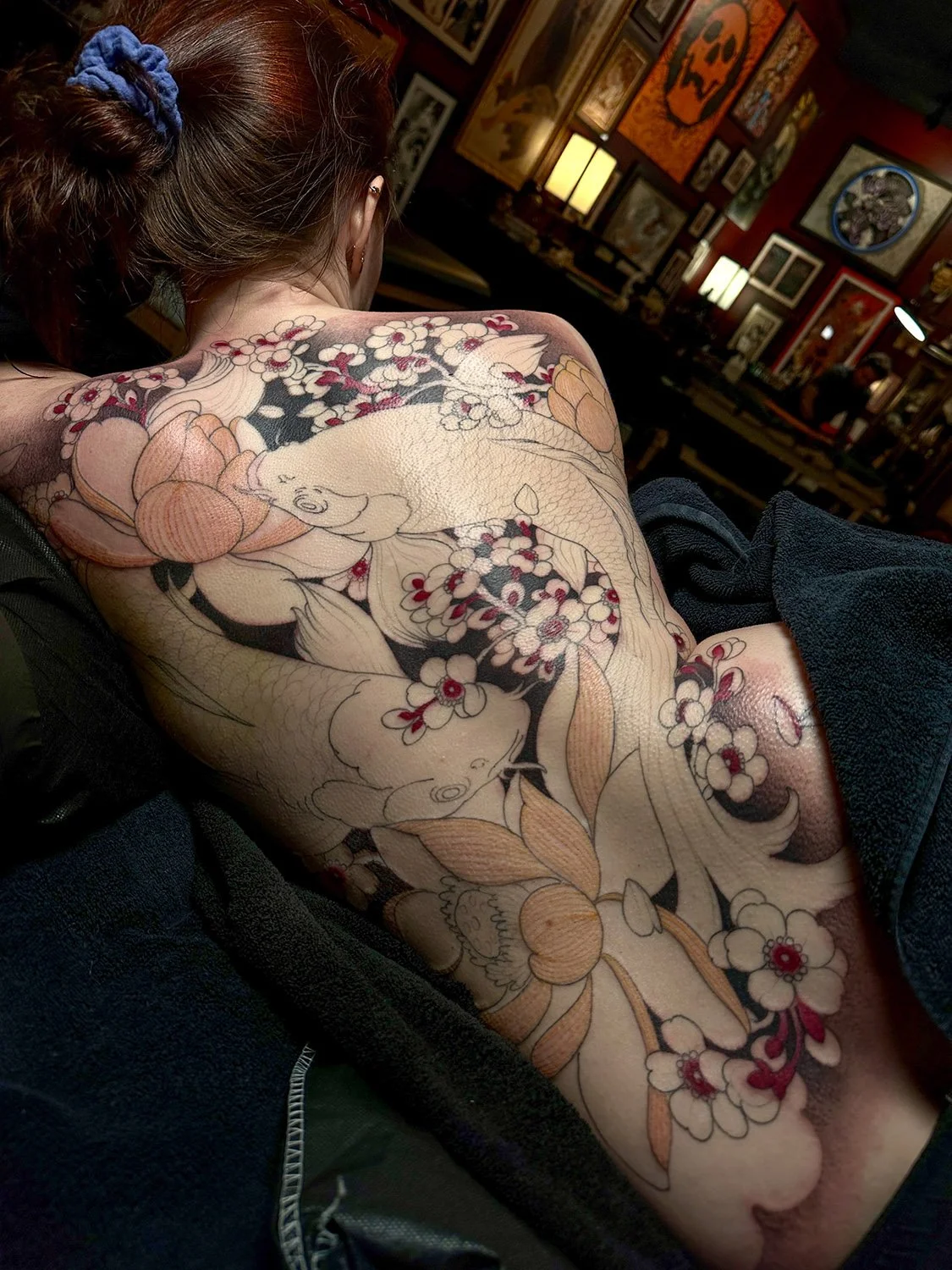
Koi, lotus & Ume in progress by Laura Jade
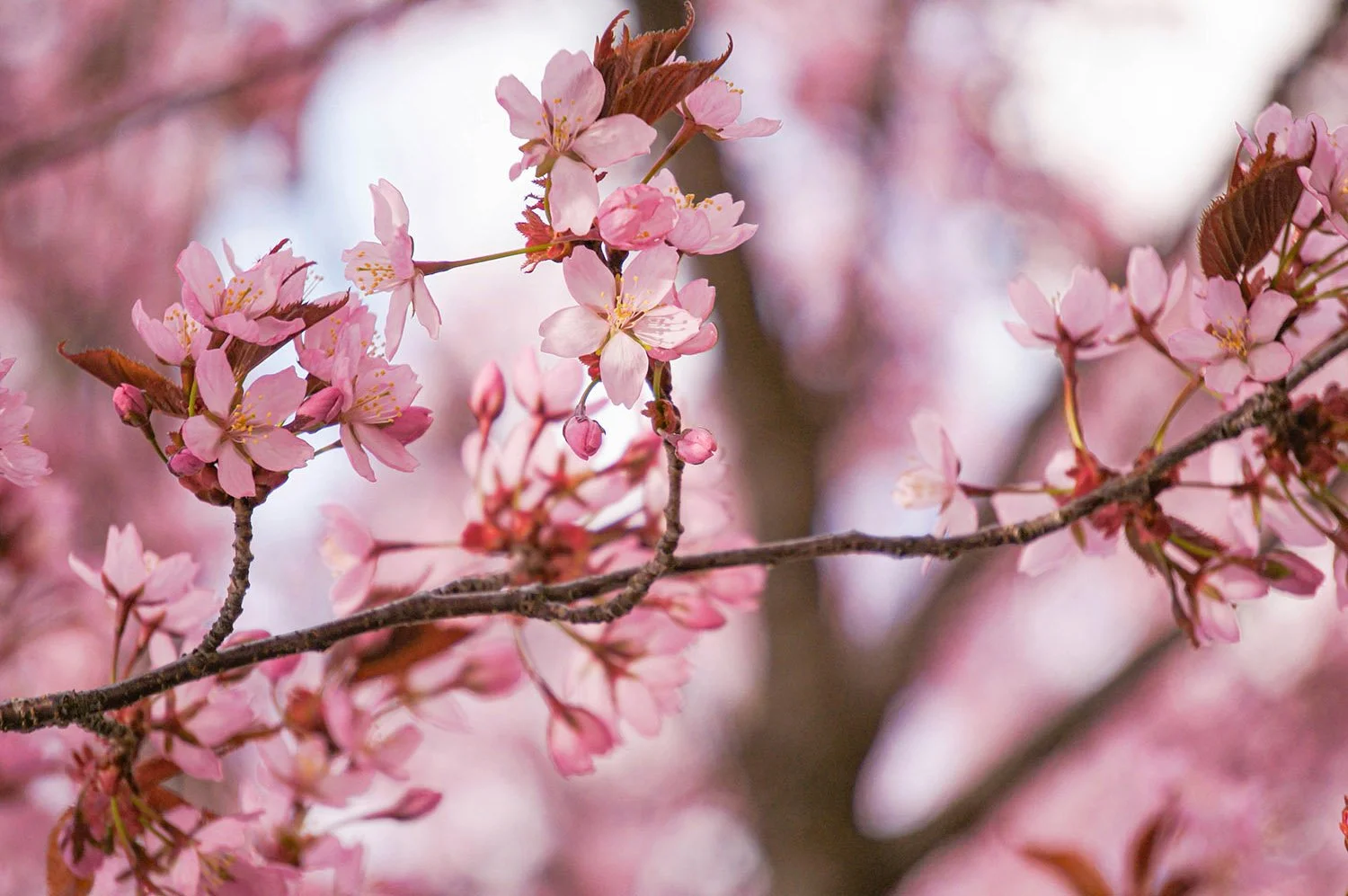
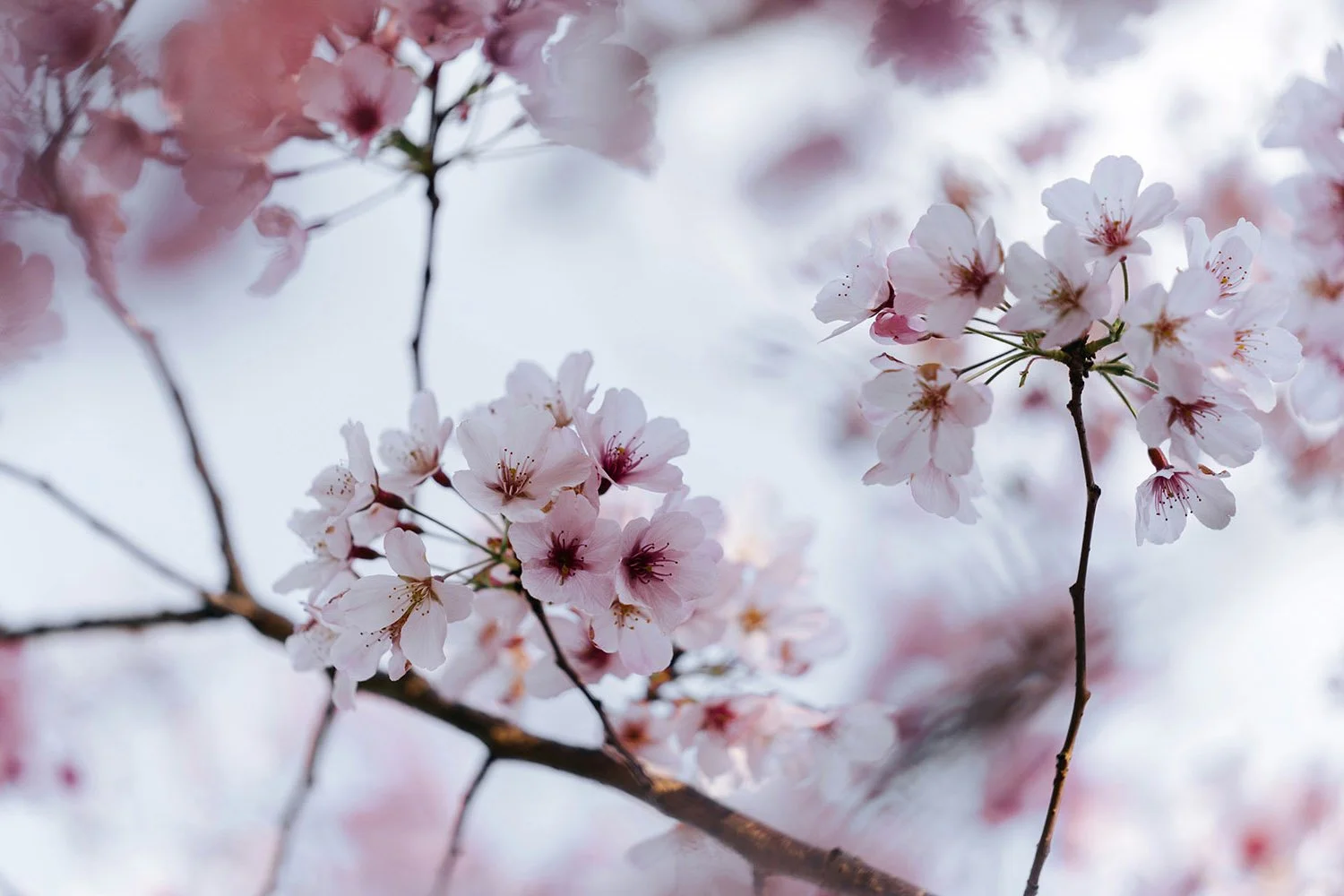
Sakura, in contrast, begin waking up while the plum blossom petals are trickling off the branches like the last bit of falling snow of the passing winter. Sakura represent spring in renewal, joy, fragility, impermanence, and ephemerality—fleeting beauty.
The distinctions are subtle but profound. The larger sakura petals capture the light and are more susceptible to wind; the clusters of blossoms mirror family and friends gathering together in celebration.
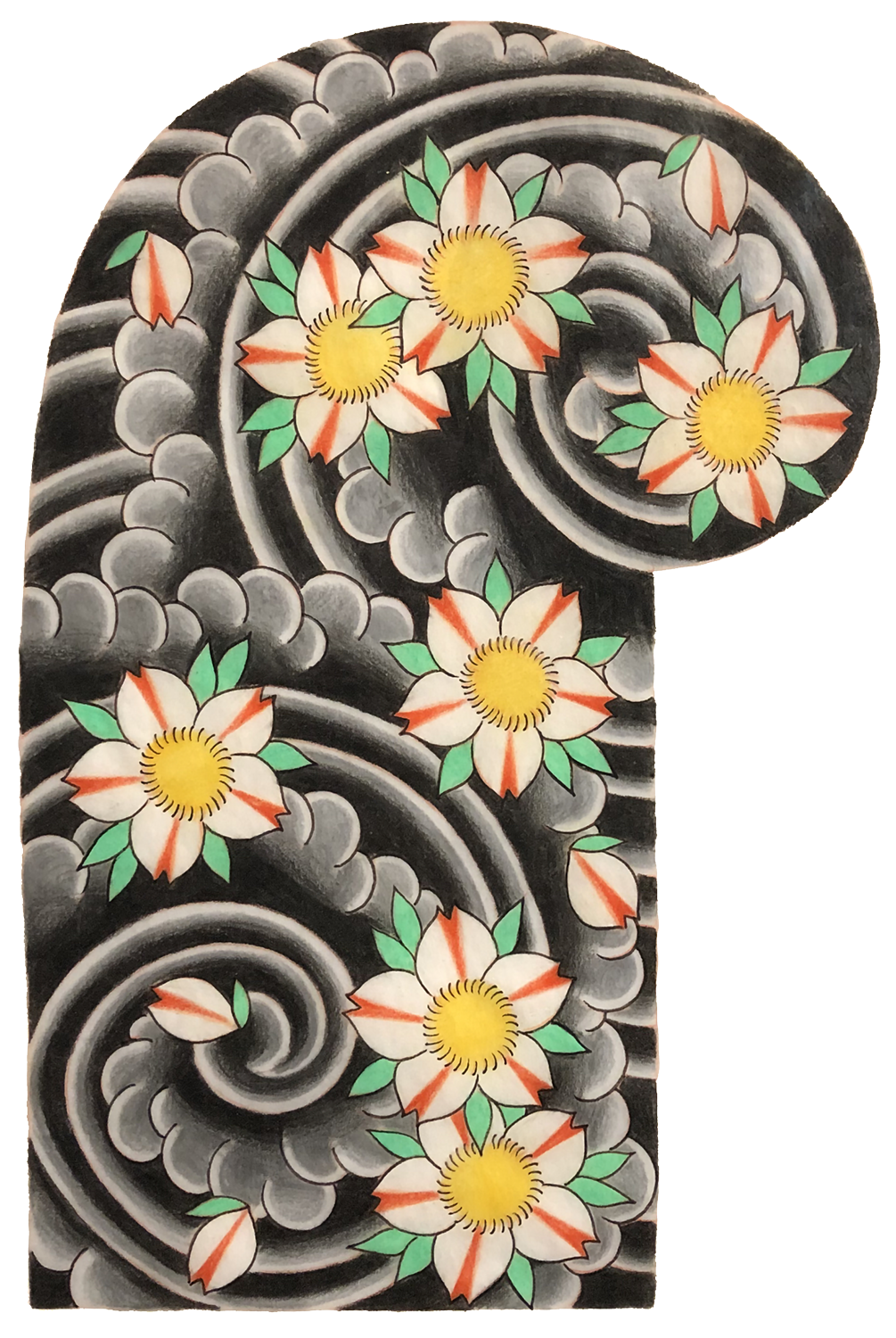
Sakura half sleeve concept by Will Self
Hanami—literally “flower viewing”—is one of Japan’s most loved traditions, a celebration that turns the short-lived bloom of cherry blossoms into something sacred. When the sakura trees burst open in soft waves of pink and white, people gather under them—in parks, along rivers, on temple grounds—with food, drinks, and friends.
It’s not a quiet affair. Families spread out blue tarps, office workers show up after hours with bento boxes and beer, and students laugh late into the night under glowing paper lanterns. There’s music, grilled street food, the effects of sake, and the constant fall of petals like snow.
But beneath all the fun, lies a bittersweet edge. The blossoms only last a week or two before they scatter, a reminder of how fleeting life and beauty can be. That’s the heart of hanami: to enjoy something fully, knowing it won’t last. It’s celebration and acceptance rolled into one—joy, nostalgia, and impermanence in perfect balance.
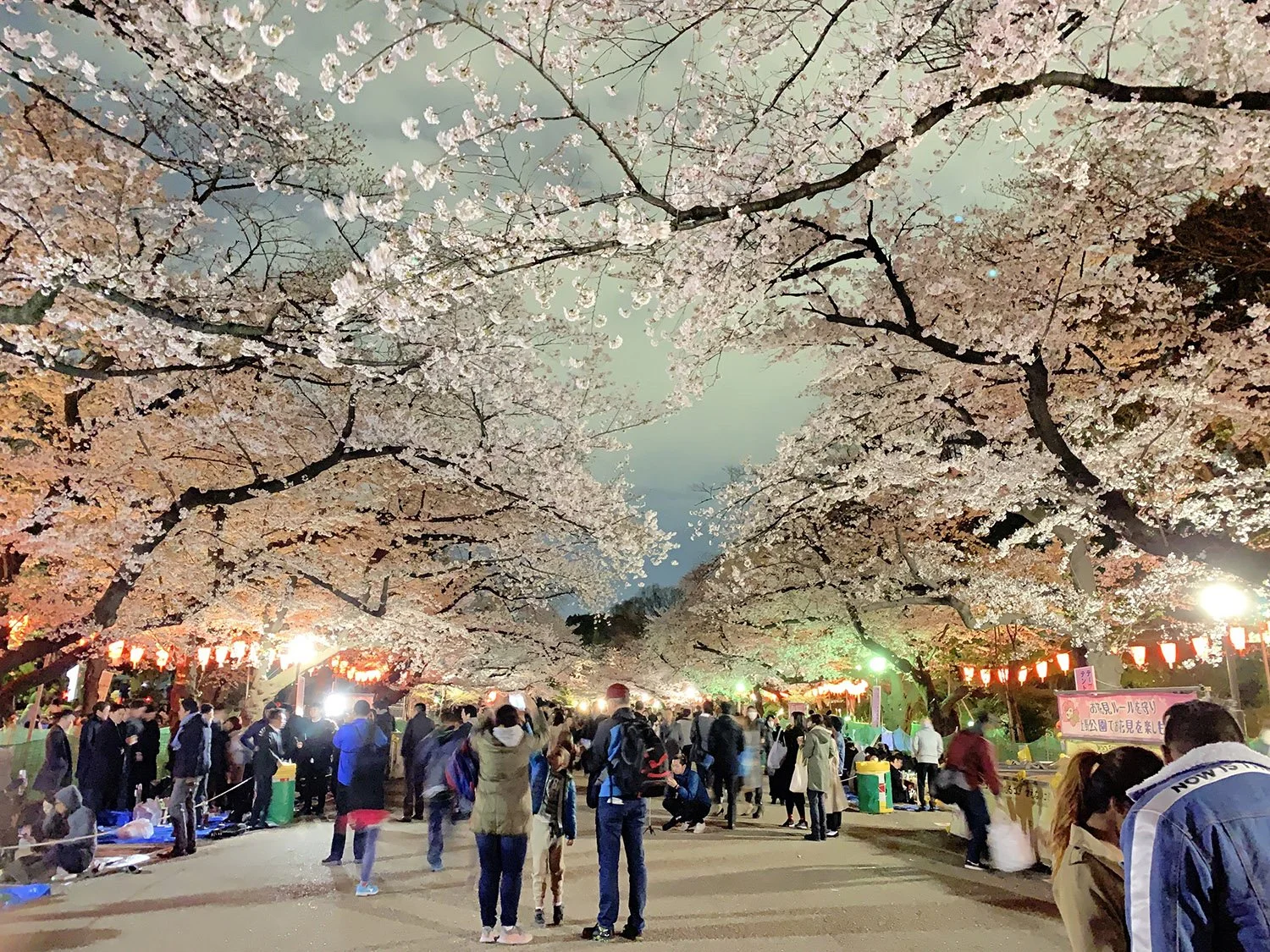
Hanami Festival, Ueno Park, Tokyo
On one of my visits to Japan during hanami, I was walking under the blossoms with our Tokyo tattooer friend Horien. I asked, as she took photo after photo of the blossoms just like any tourist, “Why are you taking those when you see them every year?” Her response: “They are beautiful every year.”
As tattooers, we add these five-petaled reminders whenever we can. Before I was aware of the distinctions, it didn’t really matter—and to be honest, I didn’t know the difference besides making the ume just a little darker, a magenta-plum color.
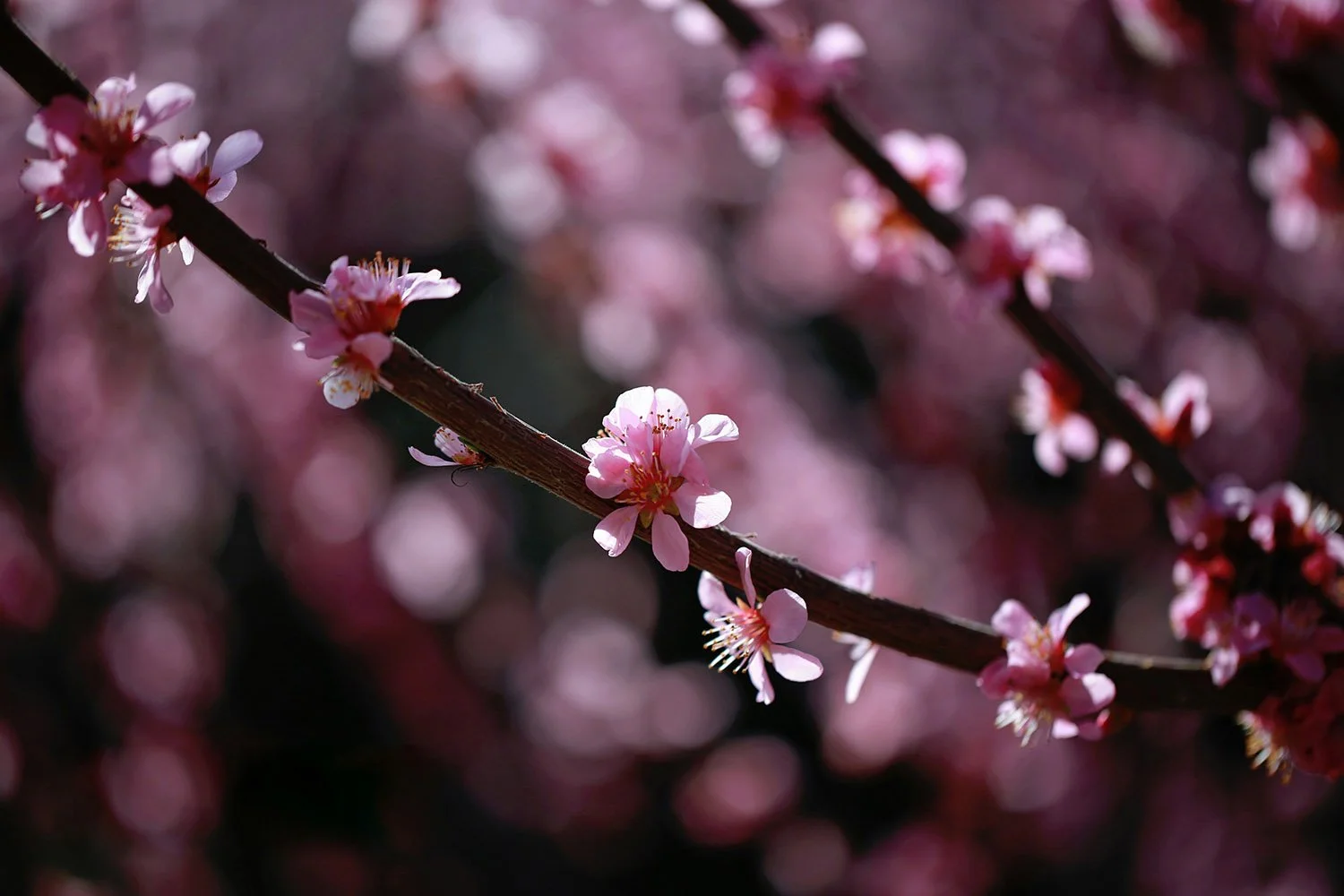
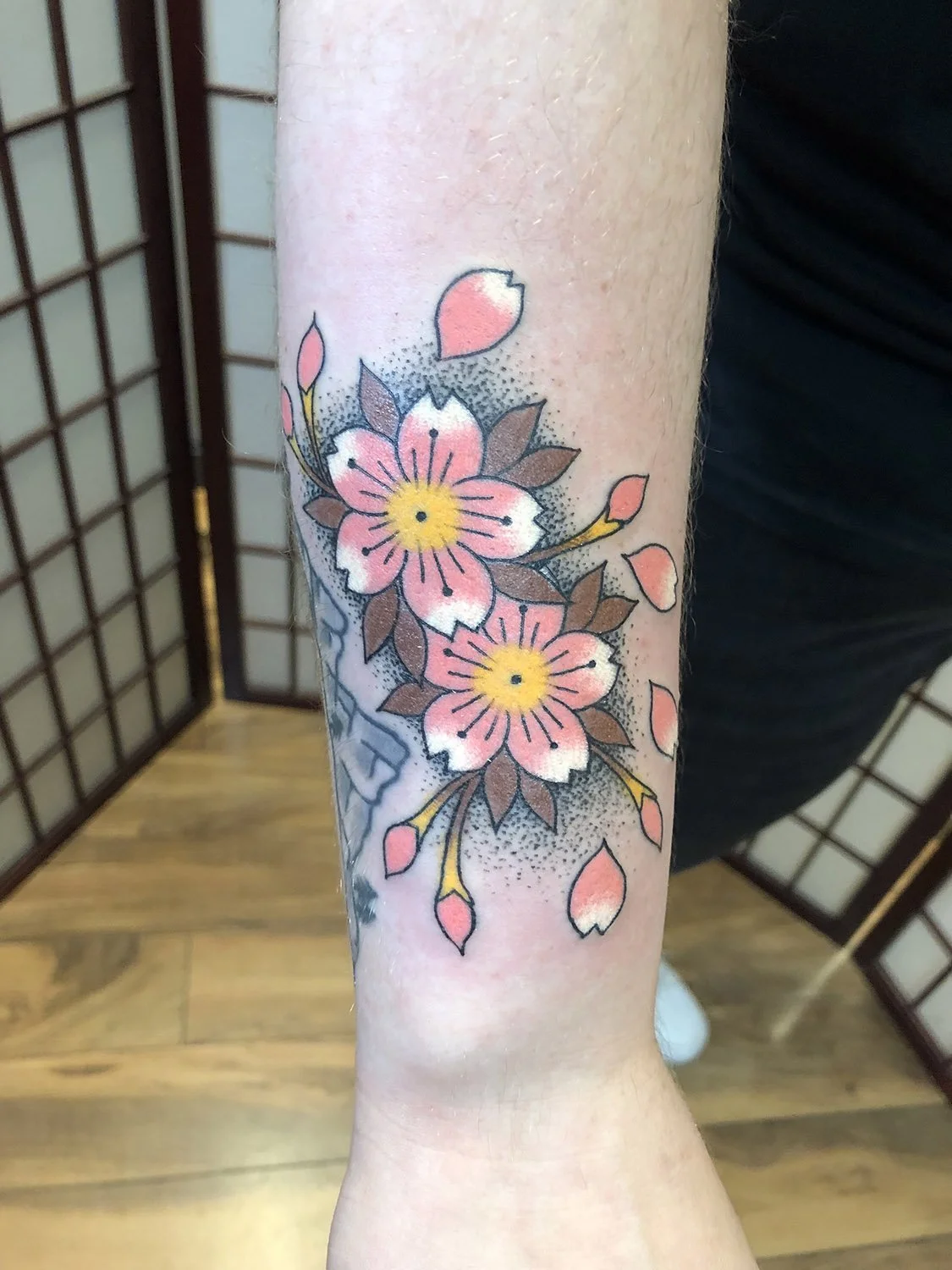
But now, even the shape of a flower petal carries meaning. The ume has rounded petals, expressing quiet resilience and inner strength. The sakura has notched petals, a small split at the tip that visually suggests fragility and separation. This aligns with its deeper symbolism—life’s impermanence, beauty that cannot last, and moments that slip away as soon as they’re understood.
Because of this, sakura became tied to the samurai ideal: to live with honor, fully and intensely, even if life ends suddenly and at its peak. Falling sakura petals were seen as warriors cut down in their prime—brilliant, brief, unforgettable.
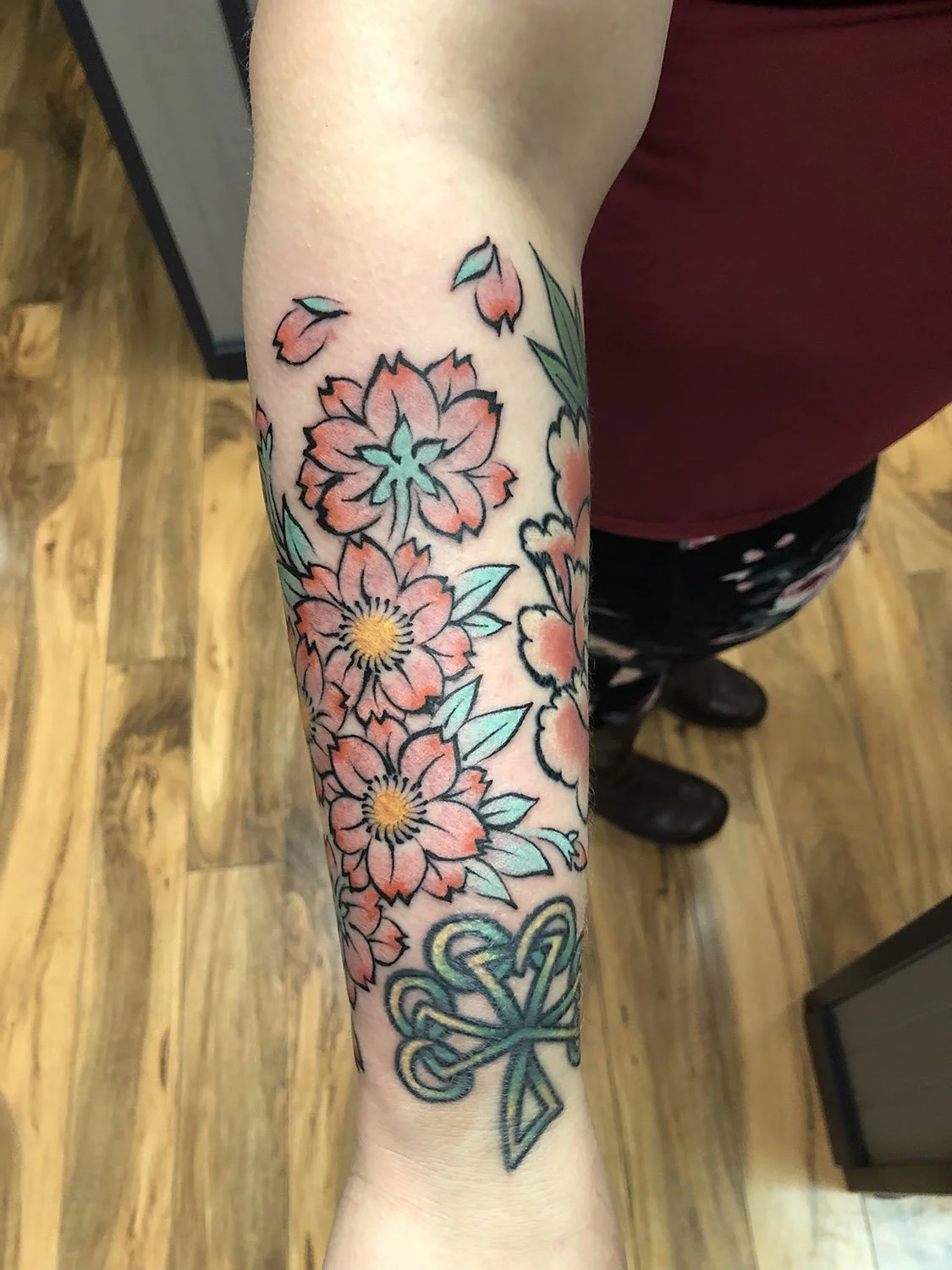
Sakura tattoo by Will Self
In Japanese tattooing and traditional design, these shapes aren’t just botanical details—they’re storytelling tools. Rounded ume blossoms suggest endurance through hardship, while notched sakura petals carry the splitting emotional weight—loss, memory, and the noble acceptance of fate.
The plum blossom clings to the branch, attached tightly to its source of stability to endure cold winds, rain, and snow. The sakura reach toward light on long, thin, fragile red stems—vulnerability not as weakness, but as acceptance.
It was during a session, as I was explaining this to a client, that it hit me just how significant the cherry blossom stems are. They tell such a different story than plum. Holding tightly to something versus letting go.
Ume or sakura?
Stand through the cold,
or fall in full bloom.
If you carved your truth into skin—not as fashion or trend—
what would you claim?
A vow to hold fast through storms?
Or the grace to shine bright and let go without fear?
In the end, everyone falls.
The question is how you go about it.
Ume or sakura?
A spirit that holds on, or one that lets go? Both take courage.
Sakura tattoo by Will Self